DSS3 – Lift for Pallet Trucks and Stackers up to 3 600 kg
Dendro DSS3 is a lift designed for servicing pallet trucks and smaller machines without requiring a low and uncomfortable working position.
Dendro Lift / DSS3
DSS3 – Service Lift for Order Pickers and Stackers
Safe and ergonomic service lift for heavier warehouse trucks weighing up to 3,600 kg.
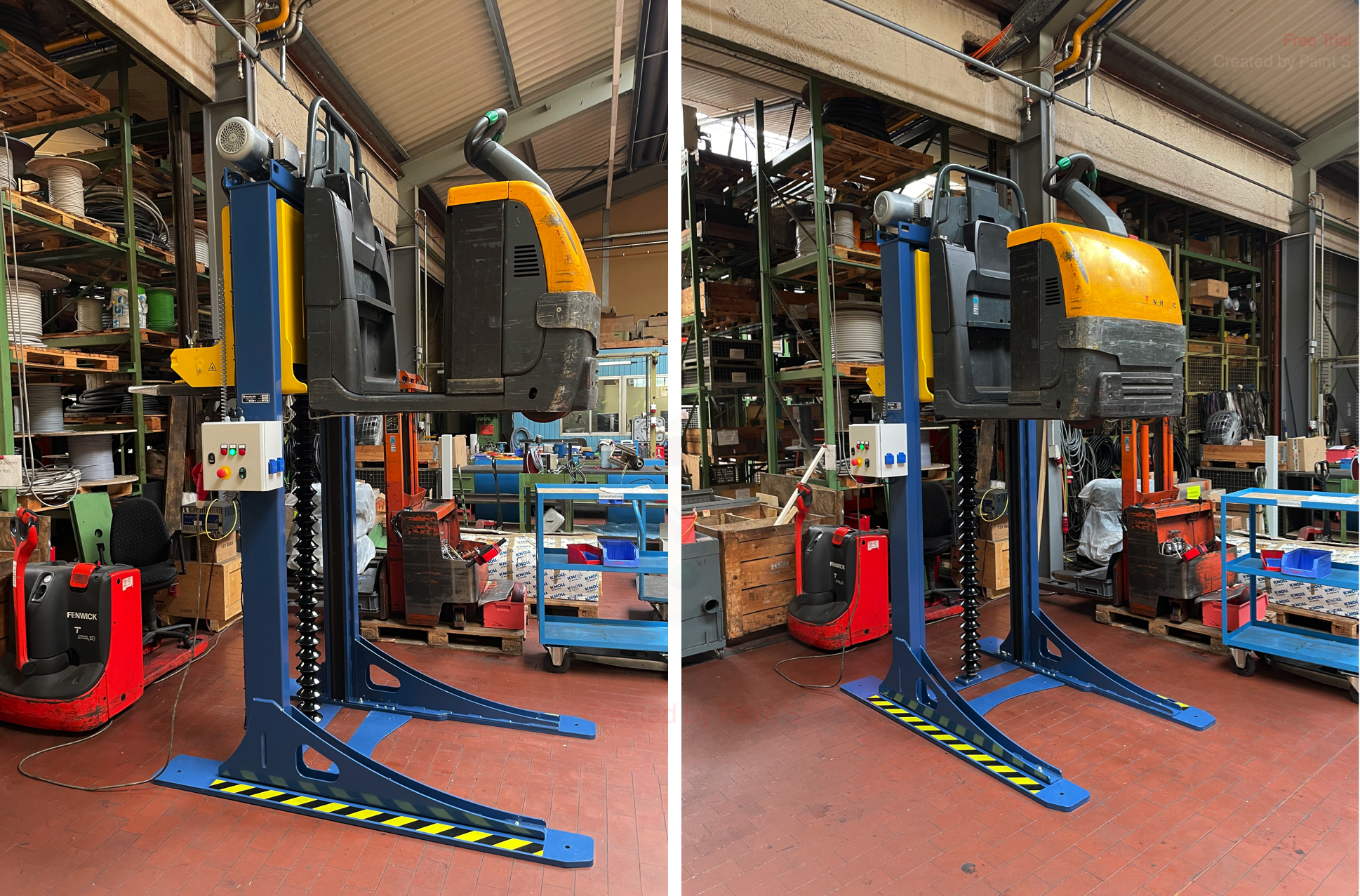
The DSS3 is designed for order pickers, stackers and internal transport vehicles that need to be raised to a comfortable working height. The truck is lifted by its support legs and forks to any required working height up to 1,800 mm. The continuously adjustable lifting movement and good access to the vehicle simplify maintenance of components such as the motor, battery, brakes, wheels and chassis.
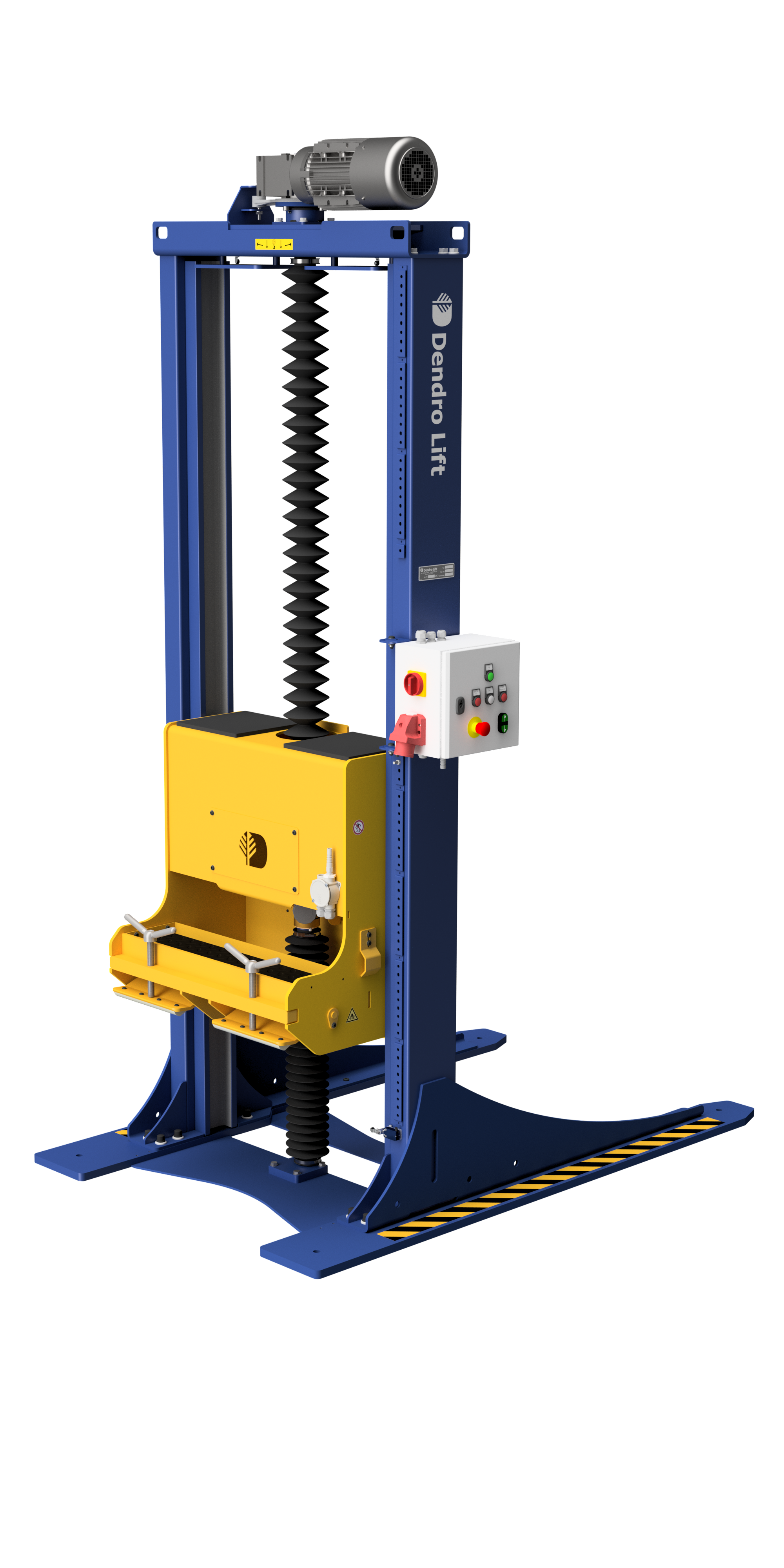
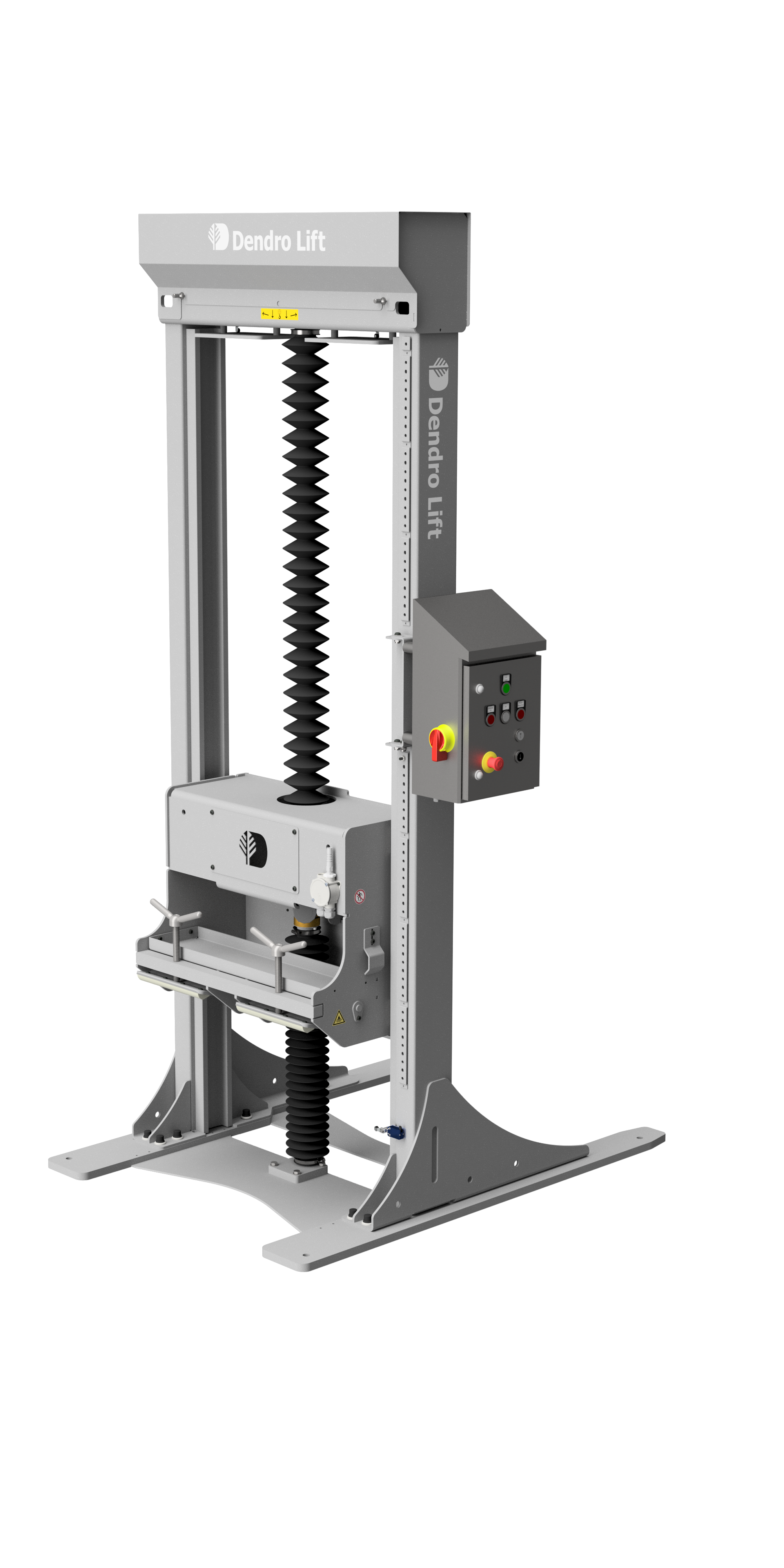
DSS3 – freestanding service lift for order pickers, stackers and internal transport vehicles up to 3,600 kg.
Technical Data
Maximum lifting capacity
3,600 kg
Maximum lifting height
1,800 mm
Lifting/lowering speed
1.2 m/min
Motor power
2.2 kW
Power supply
3 × 400 V, 16 A
Overall height
3,104 mm
Footprint
1,321 × 2,000 mm
Weight
900 kg
Installation
Freestanding, no floor anchoring required
Technical data applies to the standard configuration. Dimensions and equipment may vary depending on the selected configuration.
Time Study · Conducted with DSS2
DSS2 saved an average of 40% of service time
This time study was conducted with the DSS2, Dendro Lift’s service lift for trucks up to 2,500 kg. The DSS3 uses the same lifting principle, with support legs and forks placed in the lifting points, but the time saving has not been measured specifically for the DSS3.
A leading truck manufacturer conducted the study entirely independently of Dendro Lift. The average time for the service tasks compared was 14 min 17 sec using a truck lift and jack stands, and 8 min 38 sec using the DSS2. This equals a time saving of 39.59%, rounded to 40%.
Truck lift and jack stands14 min 17 sec
With DSS28 min 38 sec
Average time saving (DSS2)39.59% ≈ 40%
The study was conducted by a leading truck manufacturer, entirely independently of Dendro Lift, and relates to the DSS2. The time saving is calculated by comparing the measured service time without the DSS2 with the service time using the DSS2. Results may vary depending on the task, vehicle and conditions.
Operating Principle and Lifting Procedure
The DSS3 gives service technicians access to the vehicle’s central components without requiring work to be carried out kneeling or in other physically demanding positions. Lifting and lowering are continuously adjustable and must be monitored throughout the movement.
01
Position and secure: the truck’s support legs and forks are positioned in the dedicated lifting points and secured before lifting.
02
Raise to the required working height: the lifting height is continuously adjustable up to 1,800 mm.
03
Carry out maintenance: the vehicle is readily accessible for work on the motor, battery, brakes, wheels and chassis.
Electromechanical Drive System
The lifting movement is generated by a worm gear motor with brake and transmitted through a self-locking trapezoidal lifting screw protected by a rubber bellows. The load-bearing nut carries the load during normal operation. A separate safety nut provides a mechanical backup function.
The self-locking screw principle helps prevent uncontrolled lowering, and the brake motor holds the load at the selected height. Work can therefore begin as soon as the truck has been raised, without any additional securing.
Integrated Safety Functions
Self-locking trapezoidal lifting screw – helps prevent back-driving of the lifting system.
Load-bearing nut and safety nut – separate load-bearing and mechanical backup functions.
Enclosed gearbox with brake motor – holds the load in position when the drive stops.
Nut wear monitoring – stops the lift when the permitted wear limit is exceeded.
Obstacle detection during lowering – interrupts the lowering movement if an obstruction is detected.
Upper and lower limit switches – limit movement at the highest and lowest positions.
The DSS3 is installed on a flat, load-bearing floor. Its freestanding construction requires no floor anchoring. A 3 × 400 V, 16 A power supply is required for operation.
The lift can be relocated using a counterbalance forklift. For regular relocation, the optional Mover 2.0 is available.
Before use, the vehicle’s weight, dimensions, lifting points and load distribution must be checked against the permitted operating range of the lift.
Intended Use
The DSS3 is built for heavier vehicles and demanding workshop environments. It is intended for regular maintenance of order pickers, stackers and internal transport vehicles in forklift workshops, warehouses, logistics centres, terminals and industrial facilities.
The Difference Between DSS2 and DSS3
Both models offer a maximum lifting height of 1,800 mm and freestanding installation. The choice is primarily determined by the vehicle’s weight, dimensions and lifting points.
Compact model
DSS2
Capacity: up to 2,500 kg
For stackers and support-leg trucks where a compact service lift is the right choice.