

Safer and more ergonomic servicing of stackers and pallet trucks
Servicing stackers, pallet trucks and support-arm trucks places high demands on both the technician and the equipment. Many important components are positioned low, close to the floor or partly protected by the chassis, support arms and wheel suspension. This often means that work is carried out in uncomfortable positions – kneeling, sitting on the floor or working with a bent back for long periods.
But why is ergonomics so important when servicing stackers and pallet trucks? The answer is simple: when technicians have to work for a long time at a low height, the strain on the back, shoulders, knees and neck increases. With the right lifting equipment, the vehicle can be raised to a better working height, creating a more natural working position and reducing unnecessary physical strain.
For a modern truck workshop, it is no longer enough simply to lift the vehicle. The lifting equipment must also contribute to safer work procedures, better ergonomics and a more controlled service process.
With the right lifting solution, the technician can work at a more natural height, gain better access around the vehicle and reduce the need for temporary solutions. This creates a safer workplace and a more efficient service process.
The working environment starts with the lift
Safe service work begins long before the actual repair is carried out. It starts with how the vehicle is lifted, secured and positioned.
How can the right lifting equipment improve safety in the truck workshop? It provides a stable and controlled position for the vehicle. This reduces the need for temporary solutions such as blocks, jacks or improvised lifting methods. When the lift is adapted for stackers and pallet trucks, service work can be carried out more safely and more consistently.
If a stacker or pallet truck is lifted with equipment that is not adapted to the vehicle’s design, the work can become both more time-consuming and more risky. The technician may need to use additional aids to access the right components, creating variation and uncertainty in the workflow.
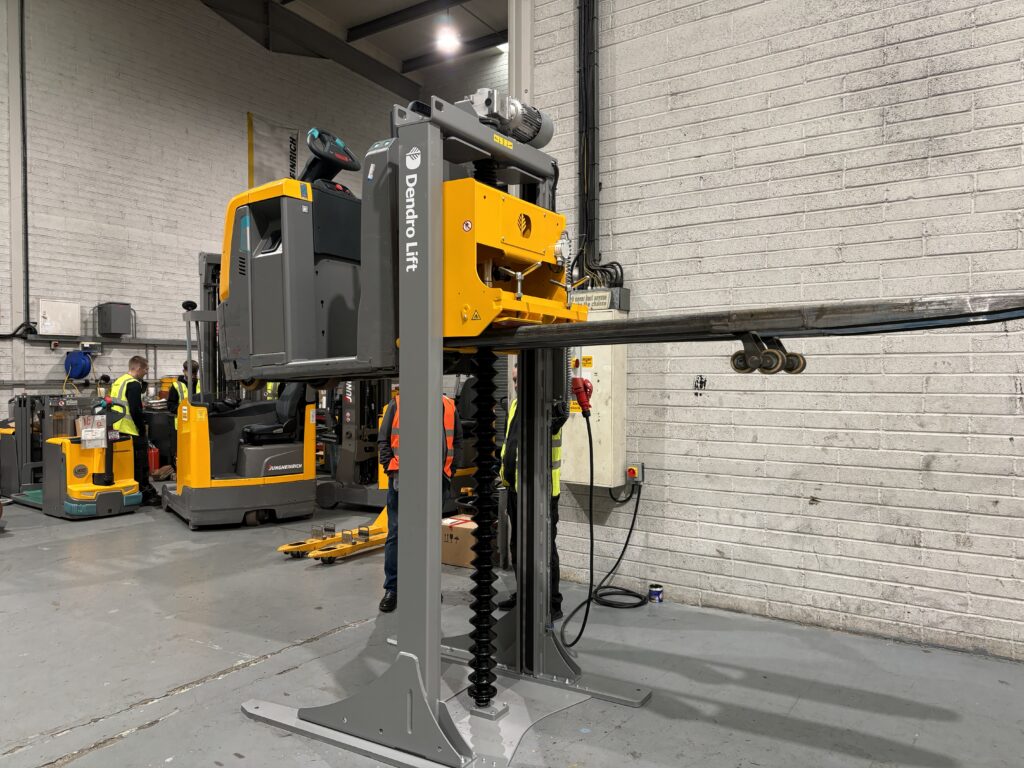
A dedicated lift for stackers provides a more repeatable and controlled method. The vehicle is positioned in the same way every time, the height is adjusted according to the task and the technician gets a stable working position from the start.
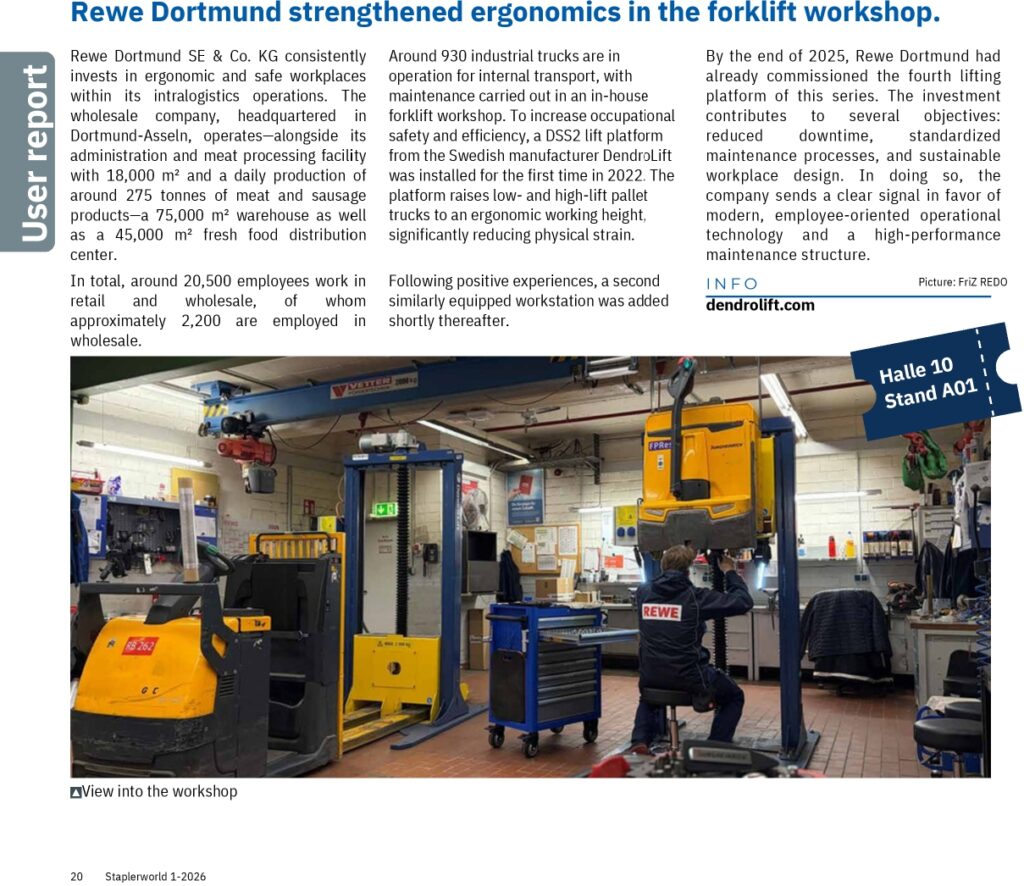
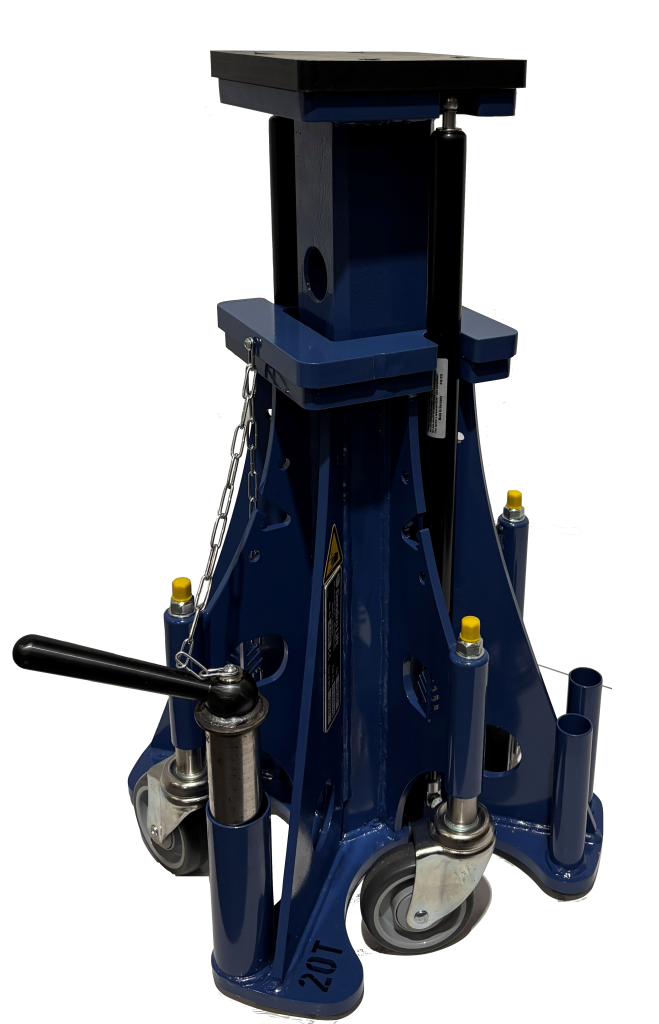
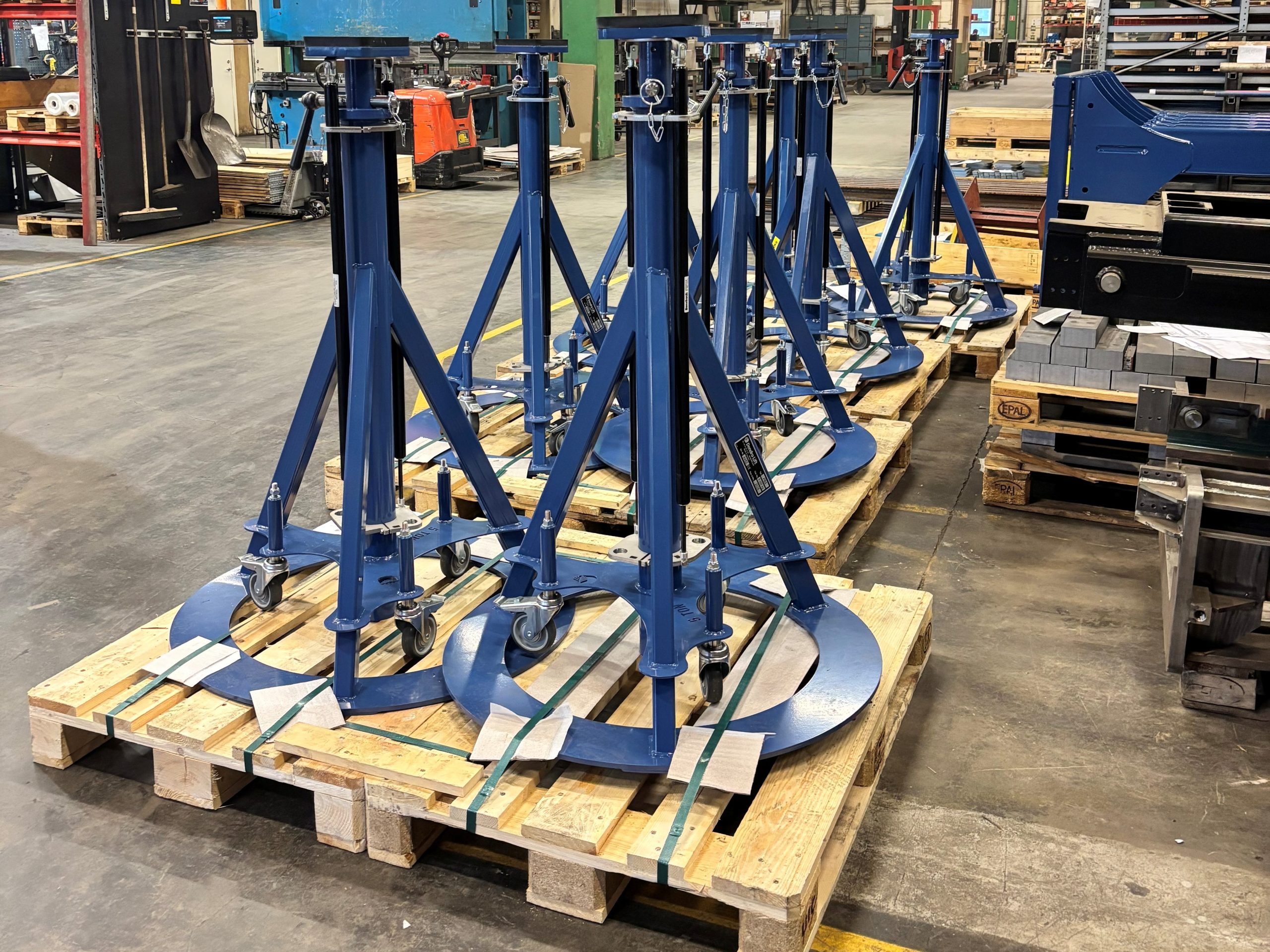
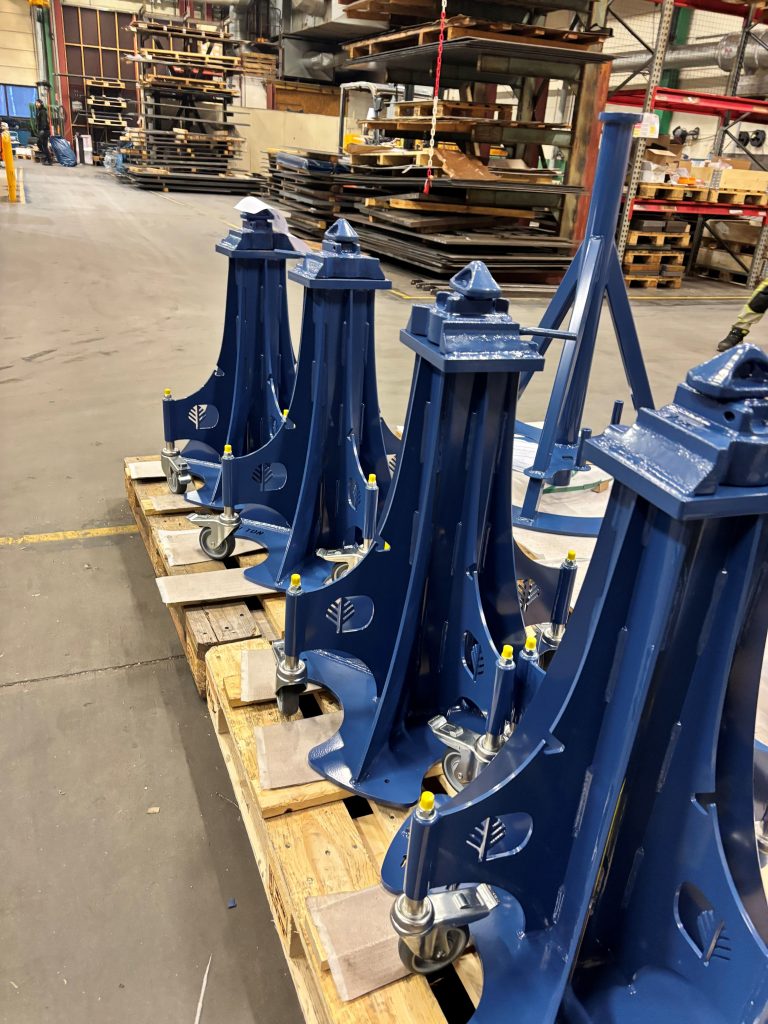
DSS2 is developed for support-arm trucks and stackers and is designed to simplify service work with a high level of safety and good access around the vehicle.
Ergonomics that reduce strain on the technician
Servicing stackers often involves work on wheels, brakes, batteries, motors and wheel suspension. These are parts that are rarely positioned at a comfortable working height when the vehicle is standing directly on the floor.
When technicians work for long periods at a low height, both the body and the quality of the work are affected. The strain on the back, shoulders, knees and neck increases, while precision can be reduced when the work is carried out in narrow or uncomfortable positions.
A common question is whether better ergonomics really affects the quality of service work. Yes, it does. When the technician works at a better height and can access components from the right angle, it becomes easier to carry out precise work. Better ergonomics can reduce fatigue, improve precision and contribute to more consistent service quality.
An ergonomic lifting solution makes it possible to adapt the working height to the task. Instead of the technician adapting their body to the vehicle, the vehicle is adapted to the technician.
DSS3 is developed to provide a more comfortable working position when servicing stackers, pallet trucks and transporters. The lift provides access to three sides of the vehicle and reduces the need for awkward and strenuous working positions.
Stable access from several sides
Good ergonomics is not only about height. It is also about access.
Which parts of a stacker become easier to access with the right lift? Mainly wheels, brakes, batteries, motor compartments and wheel suspension. These components often require both good visibility and the ability to work close to the vehicle from the right angle.
If the technician has to twist the body, reach too far or work from the wrong angle, the strain remains high even if the vehicle is lifted. That is why free access around the vehicle is an important part of an ergonomic service area.
With the right lifting equipment, the technician can work close to the components from several sides. This makes it easier to work with a straighter back, better balance and fewer unnecessary movements.
For service of stackers and pallet trucks, this is particularly important because many components are compactly positioned. When the lift provides free access, it becomes easier to work methodically, safely and with better control.
Safety without extra detours
When a vehicle is lifted, technicians must be able to trust the equipment. Unsafe lifting creates stress, interruptions and risks in the workshop.
Is safe lifting equipment only a matter of working environment? No. Safe lifting equipment improves the working environment, but it also affects efficiency, service quality and operational reliability. When the vehicle is stable and the technician can work without temporary solutions, the risk of interruptions, mistakes and unnecessary strain is reduced.
Dendro Lift’s lifts are designed for professional workshop environments with a focus on safety and long service life. DSS3 is equipped with a self-locking trapezoidal lifting screw, brake motor, emergency stop and safety limit switches. It is also CE certified according to SS-EN 1493:2022 for vehicle lifts.
These safety functions allow work to be carried out in a more controlled way. The technician does not have to rely on temporary solutions and can instead work with equipment developed for the task.
Why choose a dedicated lift for stackers?
What is the advantage of a dedicated lift for stackers? The main difference is that the lift is developed for the vehicle’s design, support arms and service points. This gives the technician better access to the parts that need servicing, without the lifting equipment getting in the way.
A general lifting solution may solve part of the problem, but it is rarely optimised for the shape, weight distribution and service requirements of a stacker. A lift developed for stackers and pallet trucks provides a more predictable setup and a better working position from the start.
The result is safer, more ergonomic and more efficient service work.
The right equipment for the right vehicle
Not all stackers and pallet trucks are the same. Weight, design and service requirements vary between models. That is why it is important to choose lifting equipment based on the vehicles actually handled in the workshop.
When is DSS2 the best choice? DSS2 is suitable for workshops servicing stackers, pallet trucks and support-arm trucks where access, ergonomics and safety are key requirements. It is a good choice for recurring service work in truck workshops, warehouses, logistics centres and industrial facilities where vehicles need to be lifted in a stable and controlled way.
When should you choose DSS3? DSS3 is suitable when the workshop works with heavier stackers, pallet trucks and transporters. It is developed for vehicles up to 3,600 kg and has a lifting height of 1,800 mm. DSS3 is therefore a strong option for operations that need extra capacity and good access when servicing larger or heavier vehicles.
By choosing the right lift from the start, the workshop gets a safer and more ergonomic workstation for recurring service work.
Easy installation and flexible positioning
Another important question is whether the lift needs to be fixed to the floor. For many workshops, flexibility is essential, especially when the service area is used for several types of work.
DSS3 does not need to be fixed to the floor and only requires a 16A three-phase outlet. It can also be moved or transported with a forklift. This makes installation simple and suits workshops that want to adapt the workspace as needed.
This means that a safer and more ergonomic service area does not have to require major changes to the premises. With the right conditions, the lift becomes a natural part of the workshop’s daily workflow.
A better working day in the truck workshop
In a truck workshop, many tasks are physically demanding. It is not possible to remove every heavy or confined task, but it is possible to create better working conditions.
With the right lifting equipment, stackers and pallet trucks can be positioned at a height that suits the task. The technician gets better access, reduced strain and a more stable working environment. At the same time, the service process becomes more structured and safer.
This makes a difference – both for the technicians who use the equipment every day and for the business that depends on reliable vehicles in operation.
How do you know which lift is right for your workshop?
The choice depends on which vehicles you service, how heavy they are and what working height you need. DSS2 suits many common stackers, pallet trucks and support-arm trucks, while DSS3 is adapted for heavier vehicles up to 3,600 kg.
The best choice is not only about maximum lifting capacity. It is also about how often the lift is used, which service points technicians need to access and what the workshop workflow looks like.
Dendro Lift can help you choose the right solution based on your vehicles, working environment and service requirements.
Create a safer and more ergonomic service area
Dendro Lift develops robust lifting solutions for professional workshops, warehouses, logistics centres and industrial facilities. With DSS2 and DSS3, you get lifting equipment developed for servicing stackers, pallet trucks and support-arm trucks – with a focus on safety, ergonomics and long service life.
Do you want to improve the working environment in your truck workshop?